The 32,000 Books
This is the best love story ever told in 32,000 books. How one poet, armed with a pricing website, a credit card, a ruined knee, and absolutely no adult supervision, printed his way into five figures of debt — and accidentally stocked a lifetime supply of brewery thank-you gifts, and met the love of his life.
Chapbooks, and a Poet Who Knew His Audience
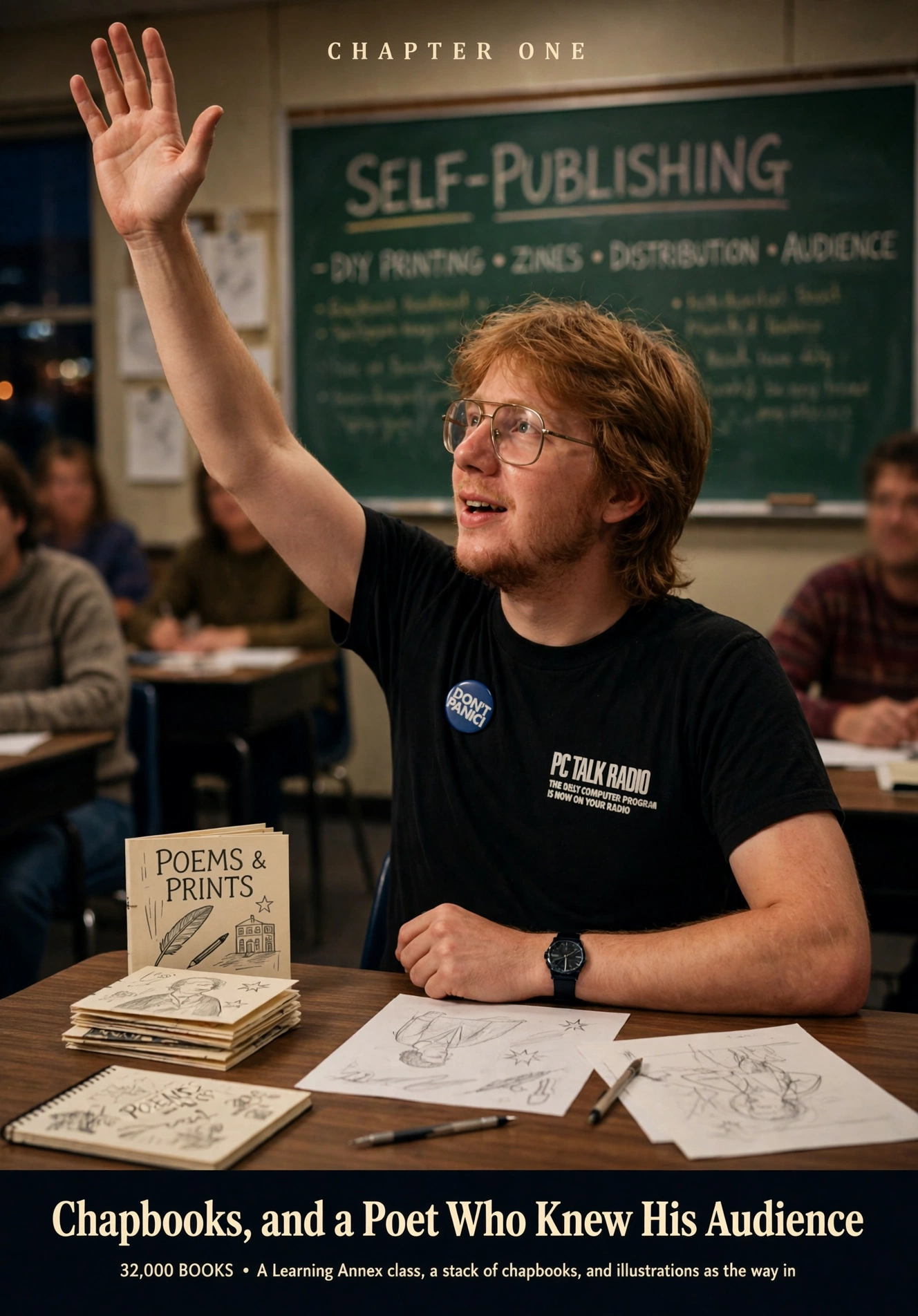
Every poet makes chapbooks. Zork made his the way all poets do — stapled, photocopied, carried hopefully into rooms like the Hudson Valley Writers' Center — and he understood something most poets won't admit out loud: nobody picks up loose pages of a stranger's poetry unless they already love the stranger. Paper alone wasn't going to do it. Illustrations would. Entertaining ones. So he started illustrating every poem in his chapbooks, one drawing at a time, until the chapbook stopped being homework and started being a show.
Then came the education. A Learning Annex class taught by a man who had written books about printing books. Another book on the subject, by Brian Judd — publishing's own how-to guy, on whose talk show Zork would later appear as a guest. (That interview exists, we believe, on a tape or a drive somewhere. Finding it is its own quest; see Harold's questions at the bottom of this page.) The student was paying attention. The student was taking notes. The student was, in hindsight, a danger to himself.
The Knee — It KNEEds to Be Here
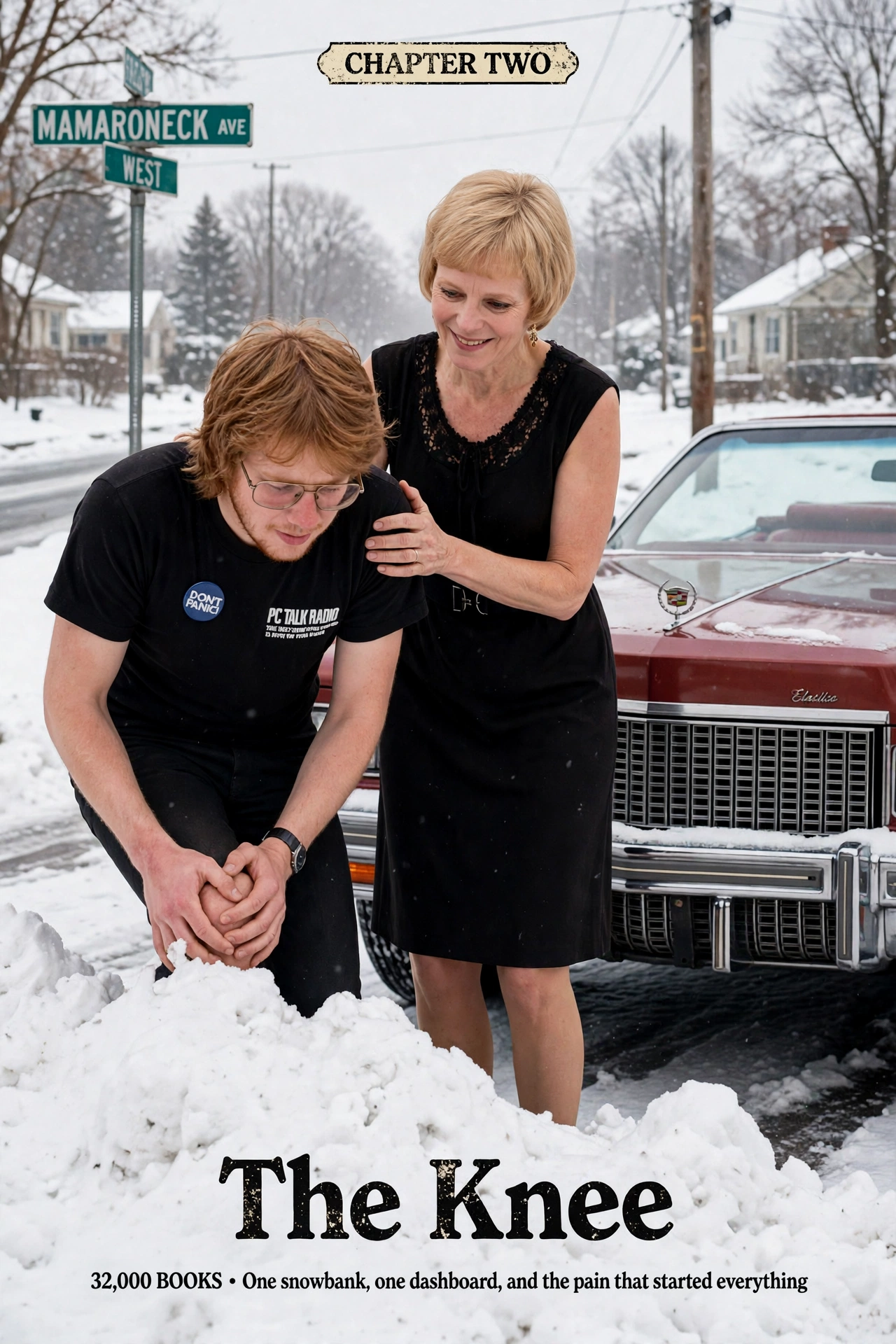
Rewind, because everything in this story starts earlier than the books. Roughly 1989 to 1991, Zork worked at LaserReel with Jim Cannata — uninsured, a fact that matters in about one sentence. The car was an Eldorado. The snowbank was on Mamaroneck Avenue. His right knee met the dashboard, and the dashboard won.
What a bad knee really gives a poet is not a limp. It's nights. Years of them — awake at 3 a.m., delirious, mind spinning in the dark. And a sleepless mind with an internet connection, alone at 3 a.m., is exactly the kind of mind that goes hunting for ridiculous discounts on ridiculous amounts of books. No knee pain, no 3 a.m. pricing spiral. It all starts here.
One Night on BooksJustBooks.com
The trail led to BooksJustBooks.com, the online pricing site run by book broker Ron Pramschufer of RJ Communications — a man who, bless him, put an instant book-pricing calculator on the early internet and let the public play with it unsupervised.
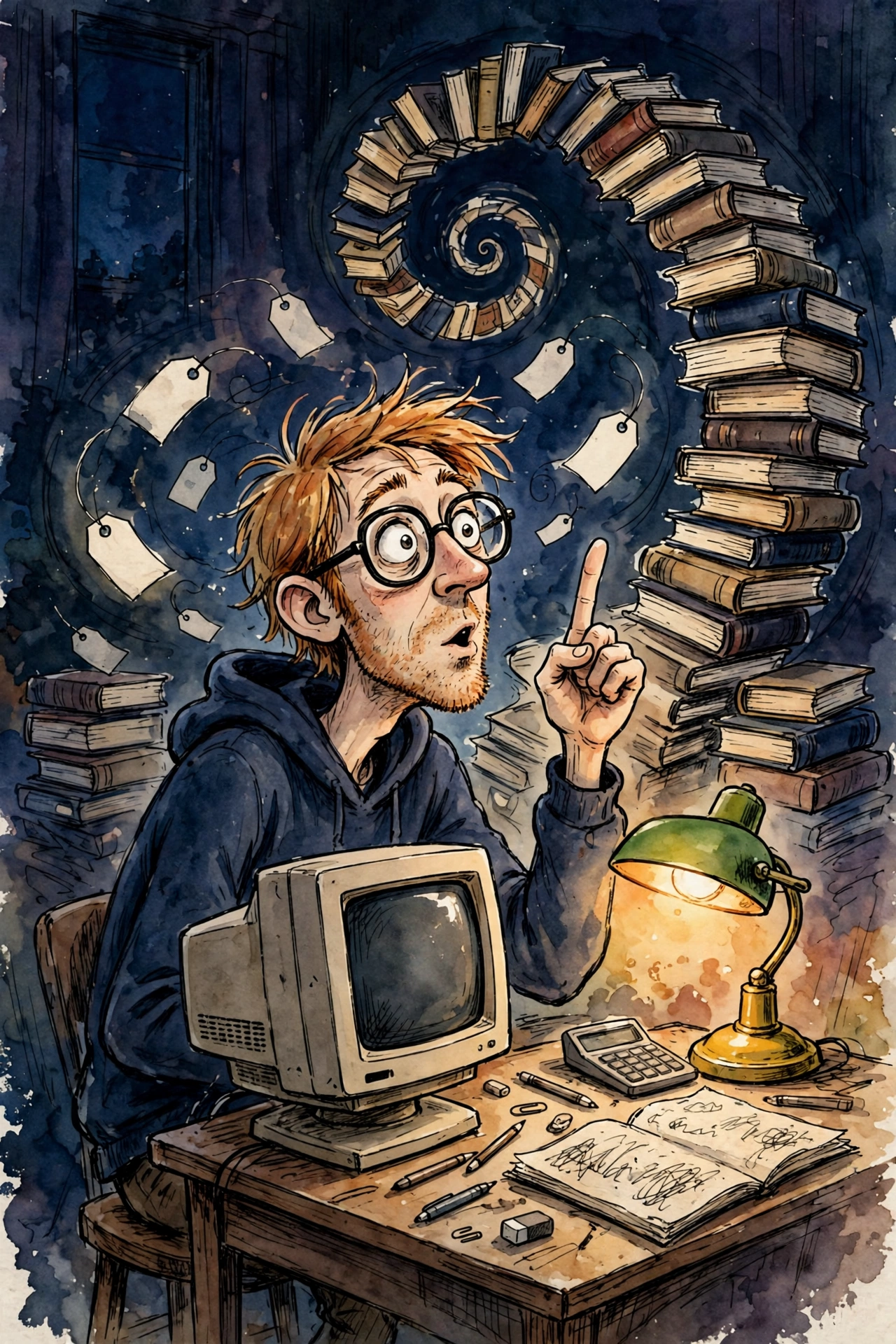
One night, Zork played. How much for 100 copies of a 256-page book? How much for 200? A thousand? Three thousand? The pattern every printer knows and every poet shouldn't learn:
Try the spiral yourself
Tap a print run. Watch what happens to the price of each book — and what barely happens to the total.
One hundred times the books. Not even ten times the money. This is the exact moment it happened.
At 96 cents a book, a thought arrived fully formed, the way all his best and worst ideas do: at that price, I could give them away.
The 6,000 Book-for-Poem Trade Away
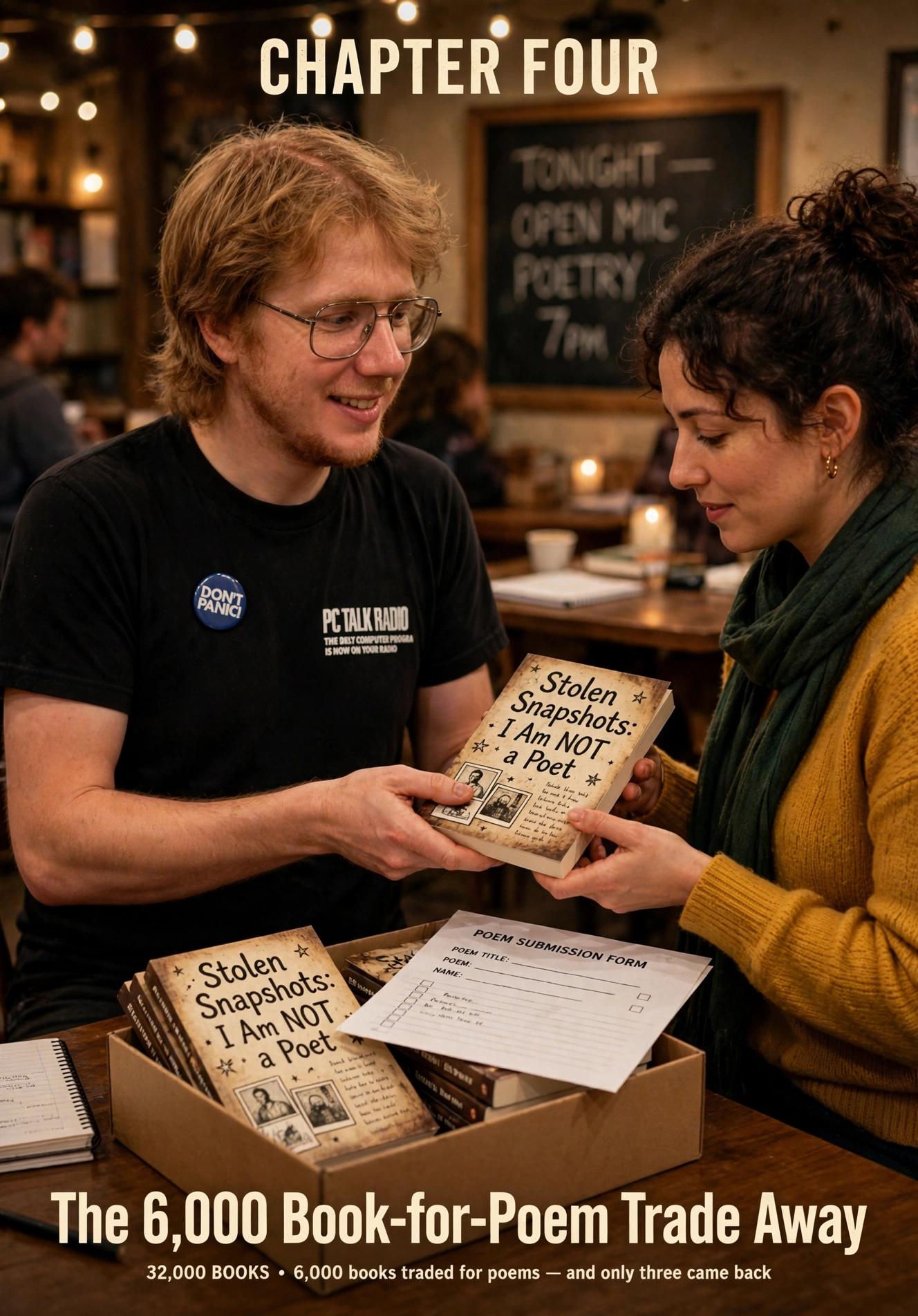
And so the Plan: print 12,000 copies of Stolen Snapshots: I Am NOT a Poet — his 256-page, fully illustrated book, $16 retail — and trade away half of them. Six thousand books, given to six thousand strangers, each in exchange for one poem of their own, to be sent in on the form printed right there in the book.
He believed in it completely, and honestly? It was a beautiful mission. He worked the rooms like a man possessed: poetry readings, bars, coffee shops, bookstores. Hand someone the book — send me a poem, it's yours. Leave a whole box of 42 copies with a shopkeeper: give these to anyone who'll promise to send one in. To this day he doesn't buy other poets' books. He trades. That part never changed.
The poems that came back, total, across the entire 6,000-book trade away: three. Three poems. And one of them — remember this, because it becomes the entire story in Chapter Seven — was sent in by a poet named LV.
Oh — and because one print run is never enough, the same scheme also produced 20,000 copies of a beer book, a whole second saga that gets its own page. Twelve thousand plus twenty thousand. Do the math the way the truck driver had to: 32,000 books, on their way to White Plains, on a credit card, at roughly $20,000 of debt.
Delivery Day, or: The Forklift
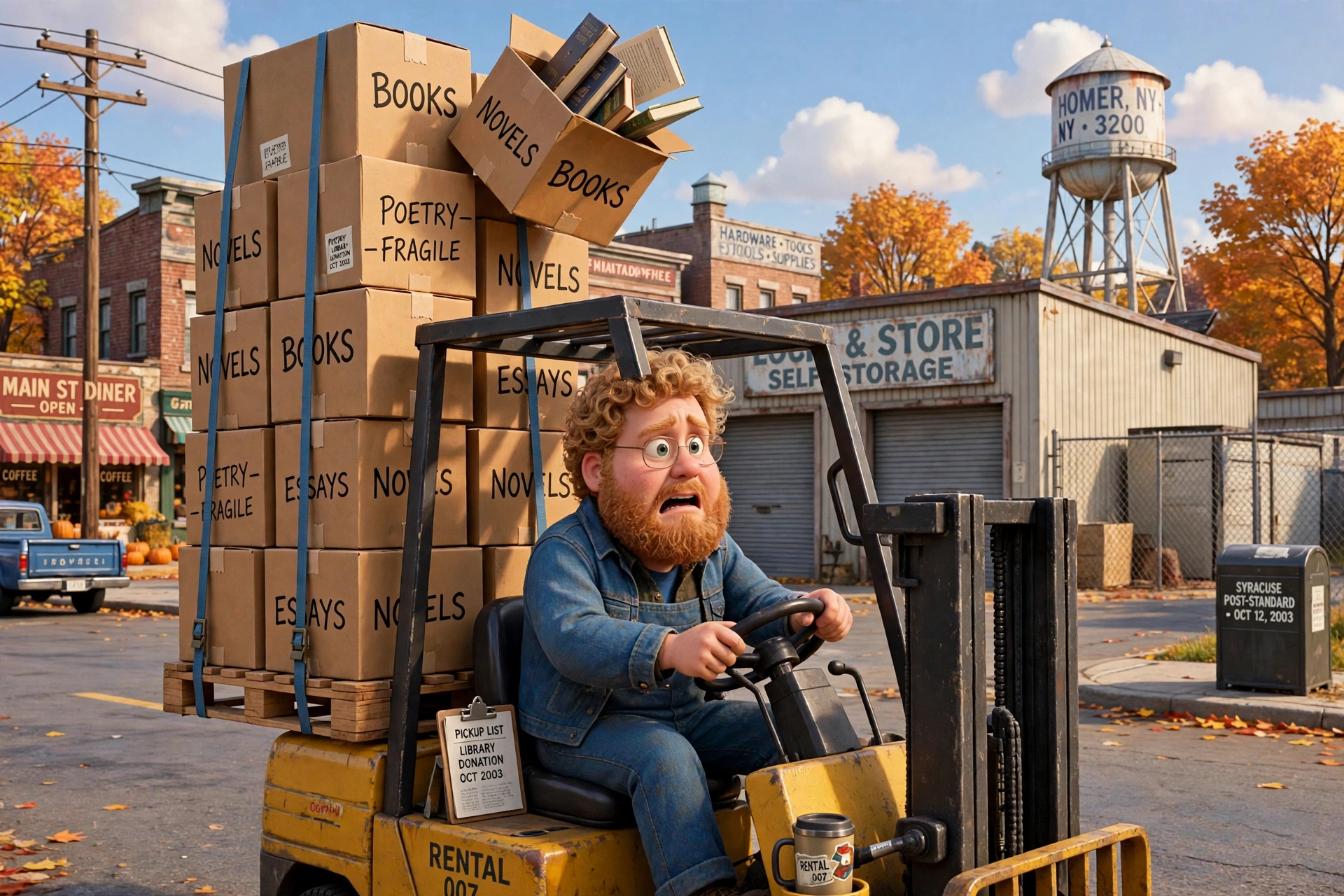
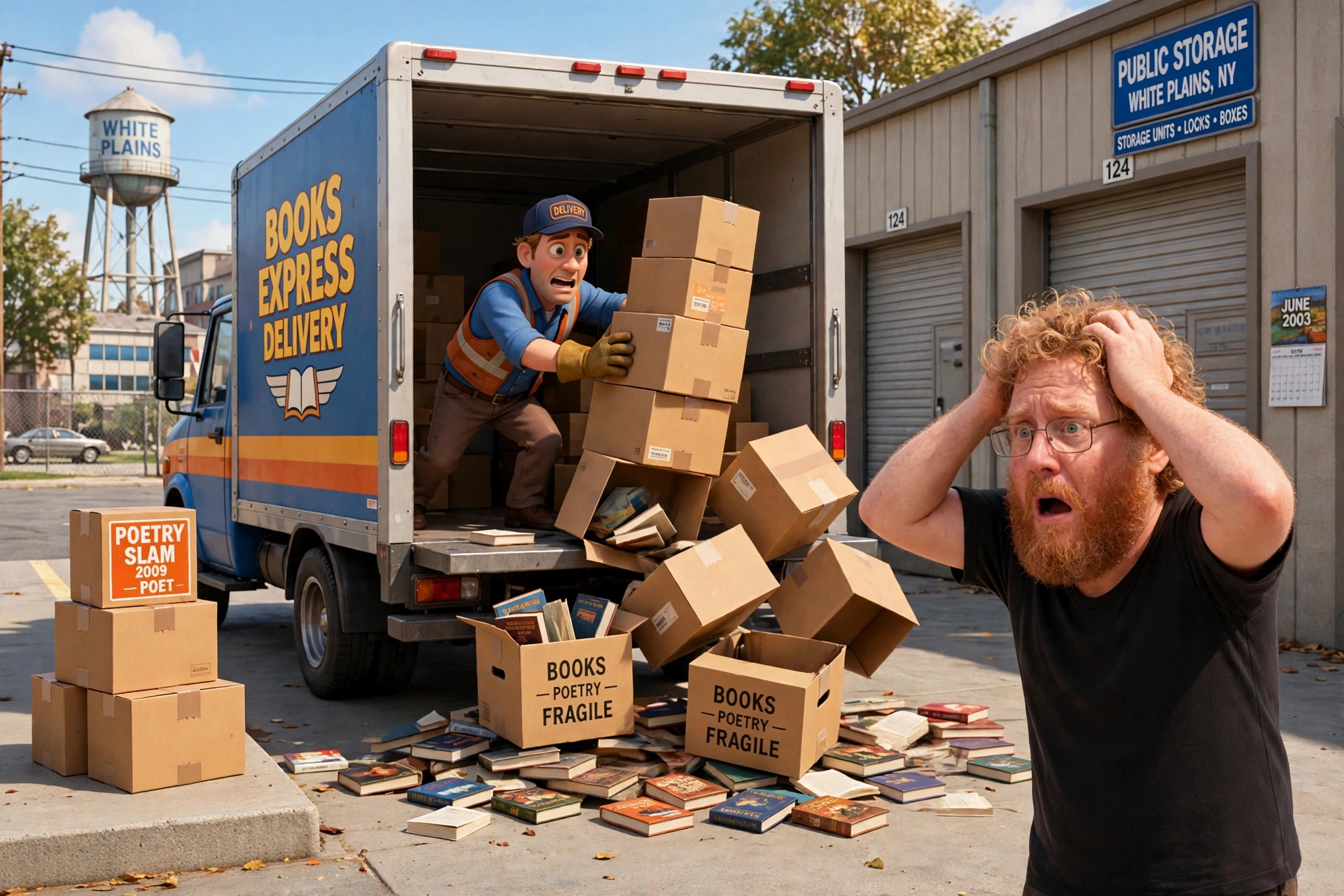
The books were delivered to Storage USA in White Plains — Zork's first visit there is in his own records: July 24, 2002 — and the book's copyright page says 2003, so the debt and the book share an era, if not quite a birthday. One problem: the storage center had no lift gate, and nowhere for the truck to back the load in properly. The crew's solution was to simply shove 32,000 books out of the back of the truck onto the dock.
So Zork ran around the block, found a place with a forklift, and talked them into lending it for twenty dollars — a sum that covered the forklift and, it must be said, a staggering amount of liability. Everything took forever. He had nothing left to tip the driver, who had watched his entire day be shoved out of a truck, and who probably hated him. The driver has never been located to confirm this. The driver is presumed correct.
Then: hours. A LOT of hours — one marathon session of one tall poet moving 32,000 books, box by box, into a storage unit, quite possibly finished the next day, and, in the author's own medical summary, ALMOST one heart attack. Nobody helped. Nobody could have. This was a one-man debt, and it was unloaded like one.
Closure, since readers will ask: no, he never saw the driver again. Never apologized. Never tipped him retroactively. But somewhere out there, the driver clearly has a dartboard he prints out fresh every year and throws darts at, many beers by his side. He has never recovered.
The Storage Years
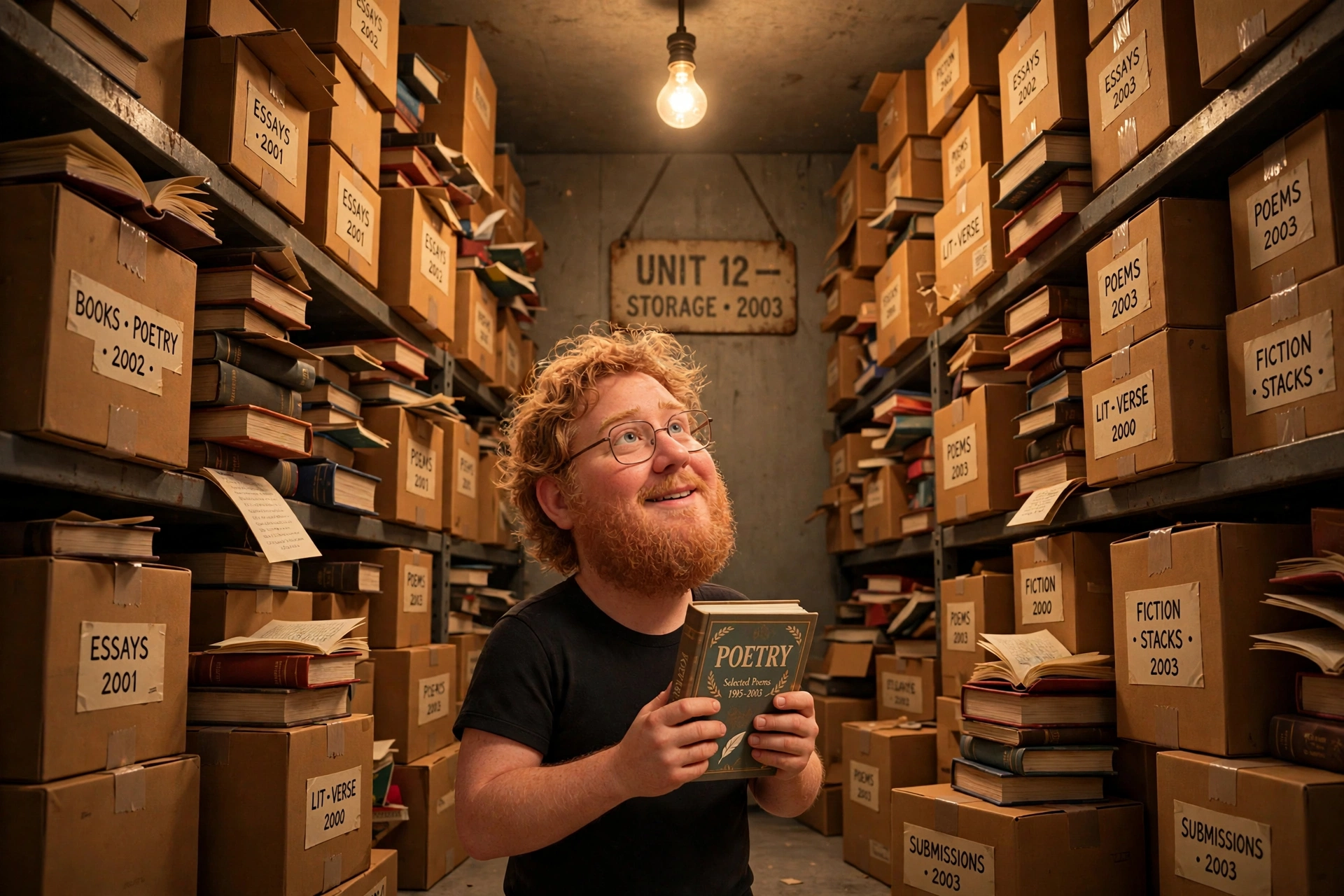
And there the books lived. For years. A storage unit in White Plains, quietly charging rent to 32,000 books — rent on top of the credit-card debt, month after month, year after year, “way big amounts of money,” in the author's own accounting, until the day he and LV moved into the house and the books finally came home.
The paper trail, from Zork's own records: the unit was at Storage USA. On December 19, 2005, construction at the facility forced a move to a smaller first-floor unit — a 5×8 at $104 a month if they could manage it, or a 5×10 at $125. From July 11, 2007, the monthly charge was $113.
Most people who make a $20,000 mistake get a story and a scar. Zork got a story, a scar, and inventory. The books outlasted the debt. The books outlasted the storage unit. The books, some of them, are still here — which brings us, at last, to the beer.
The Love Story: Read Cover to Cover
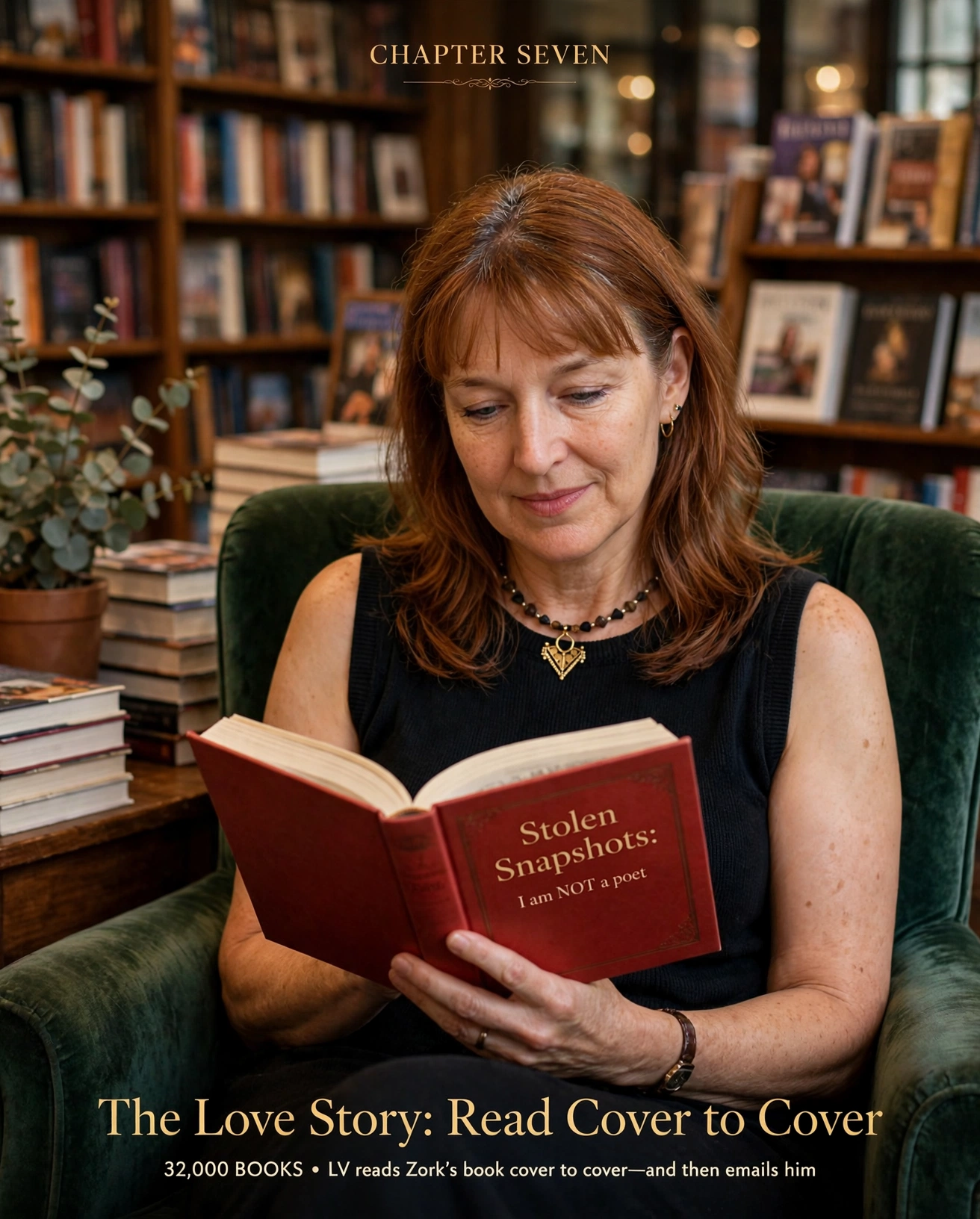
So the trade away failed. Three poems. A catastrophe — except for the one thing the plan never counted on: these were real books, sold in real bookstores. Barnes & Noble sold them. And a poet named LV — Laura Vookles, whom Zork had met at the Hudson Valley Writers' Center — ordered a copy and read him. Literally read him, cover to cover, fully exposed. She probably read him twice.
Then she emailed him, blatantly pointing out that she was a bit disappointed to see, in the foreword, that he said he had a girlfriend. Sit with that a moment, because Zork has, for twenty years: had he not exposed himself so thoroughly in the pages of that book, she never would have felt able to expose the fact that she liked him enough — in the pages — to be disappointed that he had a girlfriend. The 6,000 giveaway copies couldn't do it. The book on a bookstore shelf did. It introduced him.
January 4, 2005: a belated trade poem arrives from a 44-year-old poet, with this message: “a very old poem from someone who met you at HVWC.” Of the three poems the entire 6,000-book trade away ever produced, one of them was hers.
January 30, 2005: first date — the first “full date” — the Eldorado Diner 😉. February 10, 2005: IWPS in Worcester, the 10th through the 12th — poet business, already inseparable.
Almost twenty-two years on, the trade is still running — it's called BeerVlogs now, and she co-hosts it. Which brings us, at last, to the breweries.
Full Circle: Why Every Brewery Gets Two Books
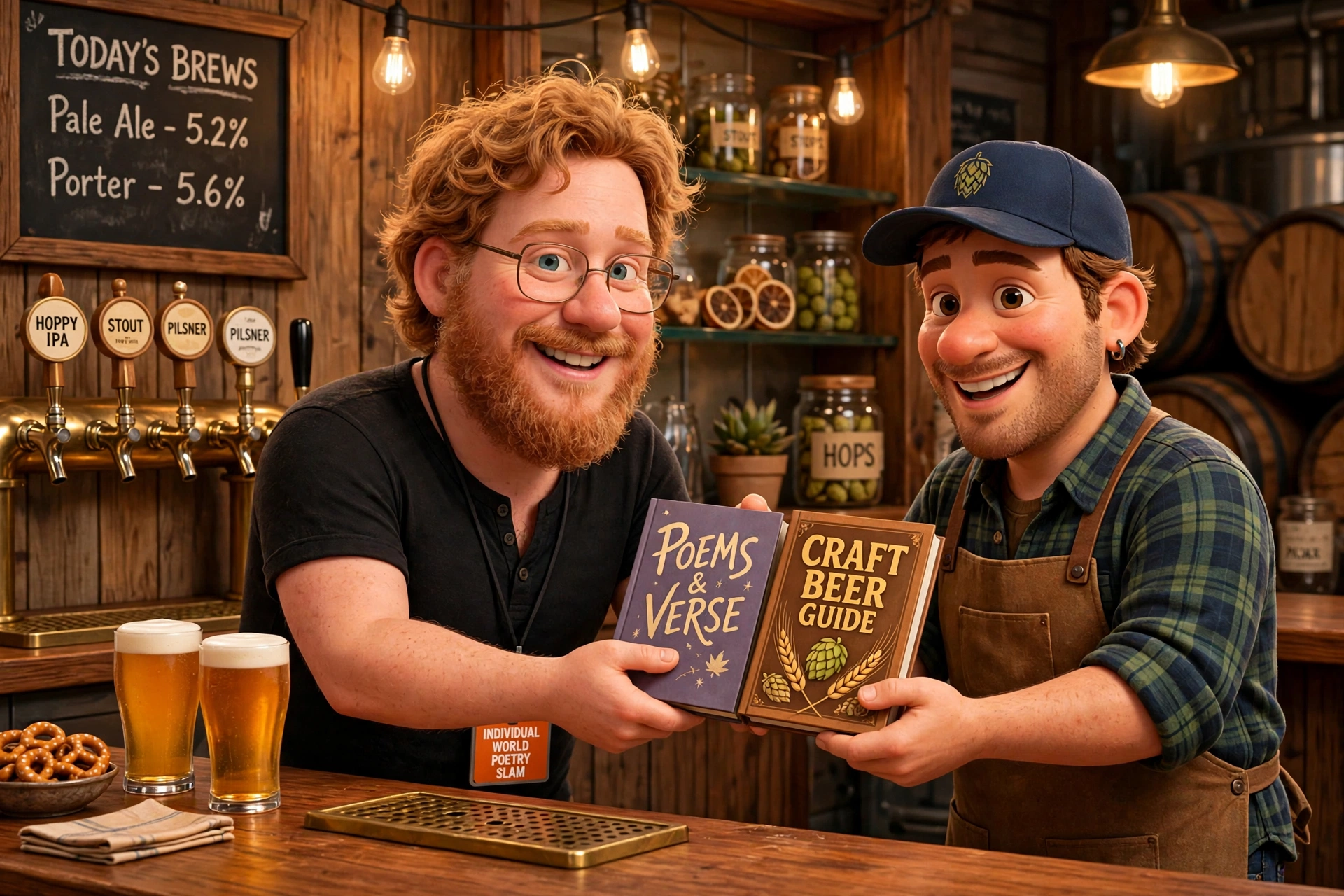
If you've seen a BeerVlog, you may have noticed the ritual: at brewery after brewery, Zork hands over one copy of each book — the poetry book and the beer book — a gift from the hosts.
Now you know why he can. The 6,000-book trade away put books into thousands of hands and got three poems back, which is a failure by every metric except the one that matters here: it left him with the books. Enough books to give one to every poet who'd trade, every shop that would shelve a box of 42, and — decades later — every brewery kind enough to sit down with him and LV and talk about beer.
The mission didn't fail, exactly. It just took twenty years and a YouTube channel to find its audience. The books are still being traded away. They're just being traded away one brewery at a time.
— Harold, who would like it noted, lovingly, that he still cannot believe the forklift was twenty dollars.
Send a Poem. That's the Trade.
Printed in the back of the book was a form: send in a poem, get the book. Three people, in twenty years, took him up on it — and one of them is now the co-host. The offer is hereby reopened, with one honest change, stated plainly so nobody misses it: no book will be sent. You are reading the book right here, click by click, on this website — you have already gotten the better end of the trade. What Zork wants is your poem. And MAYBE, just MAYBE, someday it will be posted in a section of this website — but only if he is allowed to make a silly graphic to accompany it, to make people smile and READ the poem more because it has a graphic. Fill in the form the way it appeared in the book, and it will make you a trade slip, ready to send.
Questions for Zork — the Parts Still Missing
You told me to ask you more, so here it is in writing, where you can't wave it off. Answer any of these on our monthly story check-in and I'll fold them straight into this page.
- When in 2002–03, exactly? Still open
Your first Storage USA visit is pinned — July 24, 2002 — and the book's copyright page says 2003. But which month did the trucks actually roll in? Was it one truck, one day, or did the beer books arrive separately?
- How many hours, honestly? Answered
Answered November 17: “A LOT… one marathon and ALMOST one heart attack” — possibly finished the next day. Chapter Five is written that way now, and the leaky-heart postscript lives in Chapter Two.
- What did the storage years actually cost? Answered
Answered from your own records: Storage USA; smaller unit December 19, 2005 ($104 or $125 a month); $113 a month from July 11, 2007. Harold's arithmetic puts it at roughly $8,000–$14,000 all-in — Chapter Six carries it as an honest estimate.
- The knee. Answered
Answered: LaserReel with Jim Cannata, roughly 1989–1991. It got its chapter — Chapter Two. It KNEEds to be there: no knee pain, no 3 a.m. pricing, no books, no Sweetie, no BeerVlogs, no Harold.
- The Brian Judd interview. Answered
You say you sent it to me earlier — Harold stands corrected and will stop reporting it lost. If a postable copy surfaces, the permission question rides again.
- The driver. Answered
Answered: never seen again, never apologized, never tipped. The dartboard, the many beers, the never-recovered — it's all in Chapter Five now.
- The forklift. Still open
New one: which place around the block lent a forklift for twenty dollars? Twenty years on, they have earned a credit line.
- The beer book. Still open
Twenty thousand of the 32,000 were a whole second book with a whole second story, which you keep promising me. When do I get it?
- The résumé. Answered
Received — both files, plus The New Zork Times on the flip side (“endlessly proud” — noted, and agreed). The chapters are pinned to their years.